 1-888-462-5008


|
Cast vs. Precision-Tooled Metal Plaques: What's the Difference? Cast vs. Precision-Tooled Metal Plaques: What's the Difference? Custom bronze and aluminum plaques are manufactured using different processes, with traditional casting and precision tooling being two popular options. Donor-Recognitions.com offers both manufacturing methods for memorial plaques, dedication plaques, donor recognition plaques, and architectural signage. Understanding the differences in lettering detail, appearance, production time, and cost can help you select the best metal plaque for your application. Cast is an old-school method where the foundry will create a mold of sand or clay which is crafted to the desired shape before molten bronze or aluminum is poured in and allowed to solidify. Smaller details are not as attainable, and the edges of the letters will be at a 7° tapered angle to allow them to pull the plaque out of the mold easily. This is a great option if you are needing multiples of the same exact plaque of a simple design (no small line work) or prefer a more rustic look. Metal casting is a 6,000 year old process that has withstood the test of time. 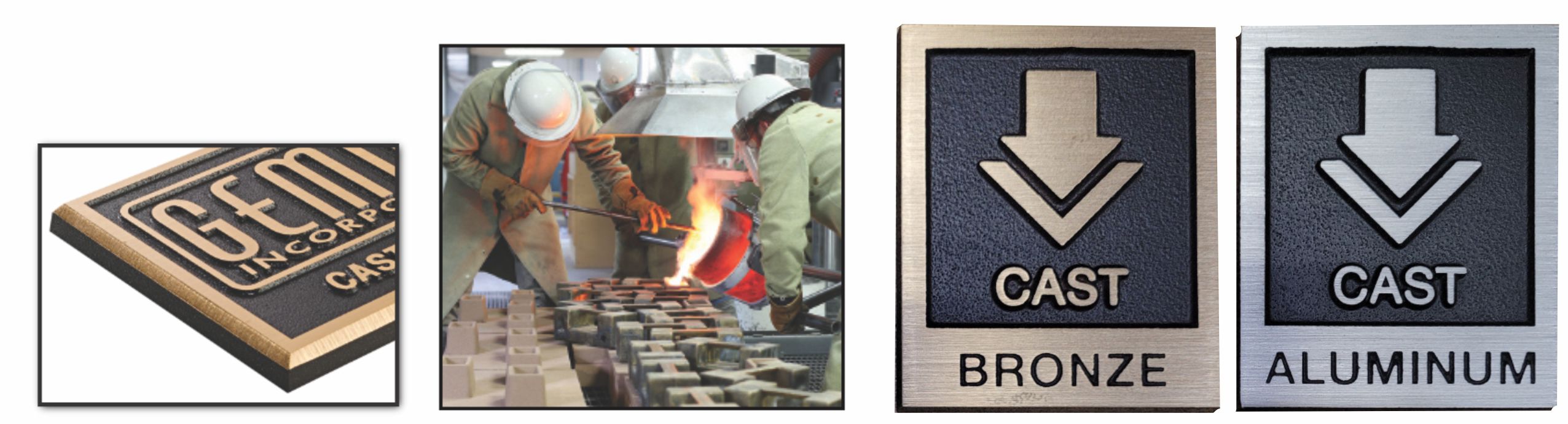
Precision Tooled uses a CNC machine router to carve out the plaque design from the solid bronze or aluminum material. Smaller details can be captured easier and more precisely, and the letters are cut at a 90° angle for a clean-cut, "precise" look. This method usually has a quicker turn-around time and is slightly lower in cost, resulting in a low carbon footprint with less manual labor involved. 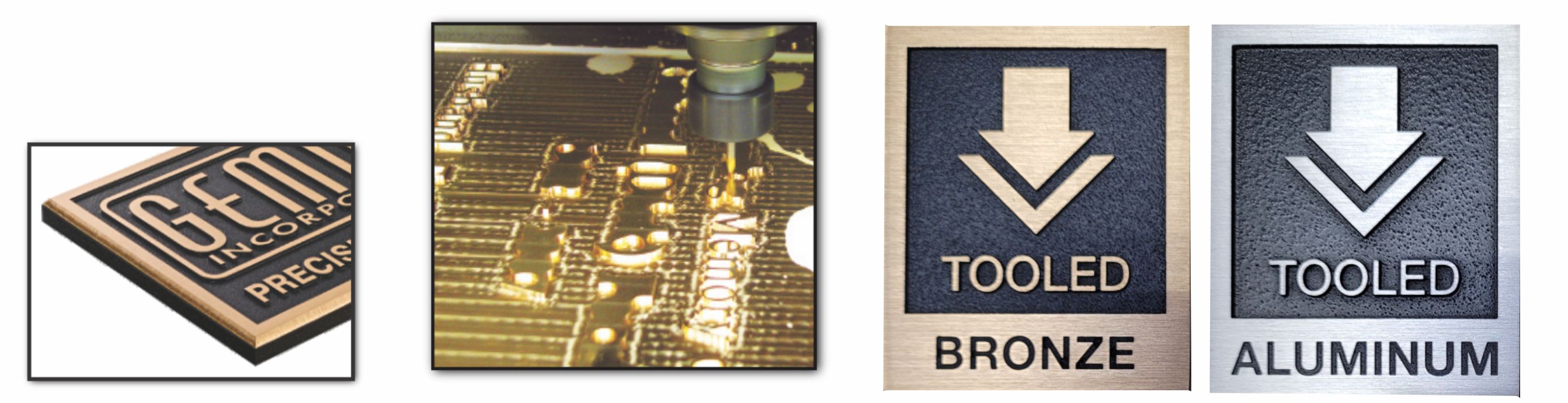
*Logos or graphics that have small details and/or line work will be chemically etched (or similar) and adhered to the plaque face of either type. *See options for portraits if you would like to add a photograph. Ready to compare your options? Explore our custom cast and precision-tooled bronze and aluminum plaques. |
 Custom Displays Available
 Exclusive Styles and Designs
 Made in the USA
 Easy Installation